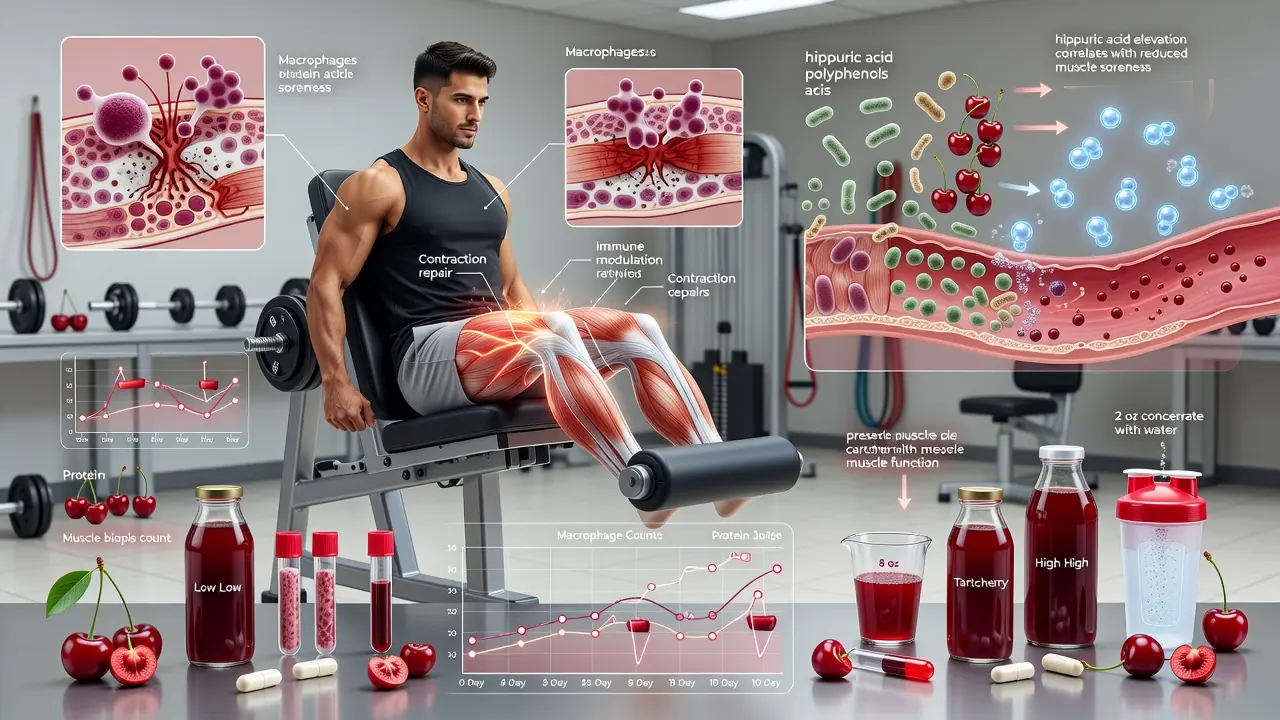
A small controlled study suggests that tart cherry supplementation alters the protein activity and immune-cell response inside muscle tissue after intense exercise. The researchers also found a link between a gut-derived compound and better muscle function, though the trial was not designed to prove cause and effect.
What the researchers set out to measure
Most recovery research tracks soreness or performance, but this team wanted to look at what was happening inside the muscle itself. They recruited 34 healthy, recreationally active young men and assigned them to a placebo, a low-dose tart cherry concentrate or a high-dose tart cherry group. Participants took their assigned supplement for seven days before a muscle-damaging workout and continued during a short recovery period, for a total of 10 days.
Changes in muscle proteins and immune activity
After the exercise protocol, the researchers assessed muscle function, collected blood samples and took muscle biopsies. The most notable result was that tart cherry significantly changed the muscle's protein profile. The shifts involved proteins linked to muscle structure, muscle contraction, cellular repair and immune-cell activity within the tissue.
The team also reported altered macrophage activity. Macrophages are immune cells that help clear damaged tissue and support repair, so changes in their behavior point to a possible role for tart cherry polyphenols in how muscles respond to exercise stress.
The gut microbiome connection
The study also measured significant increases in hippuric acid, a compound produced when gut microbes break down polyphenols from tart cherries and other plant foods. Participants with higher hippuric acid levels tended to keep better muscle function after the damaging exercise. The researchers did not design the study to show that hippuric acid directly caused this effect, so it should be read as a lead rather than a conclusion.
Limits and practical takeaways
The trial was short, lasting only 10 days, and it involved a small group of young men, so it does not show long-term training benefits. The authors did not evaluate how tart cherry affects adaptation over months of training. Readers who want to add tart cherry to their routine can look to the research cited in the source material, which suggests about 8 to 16 ounces of tart cherry juice daily, or about 2 ounces of concentrate diluted with water. Anyone with questions about dosing or supplements should check with a qualified health professional.