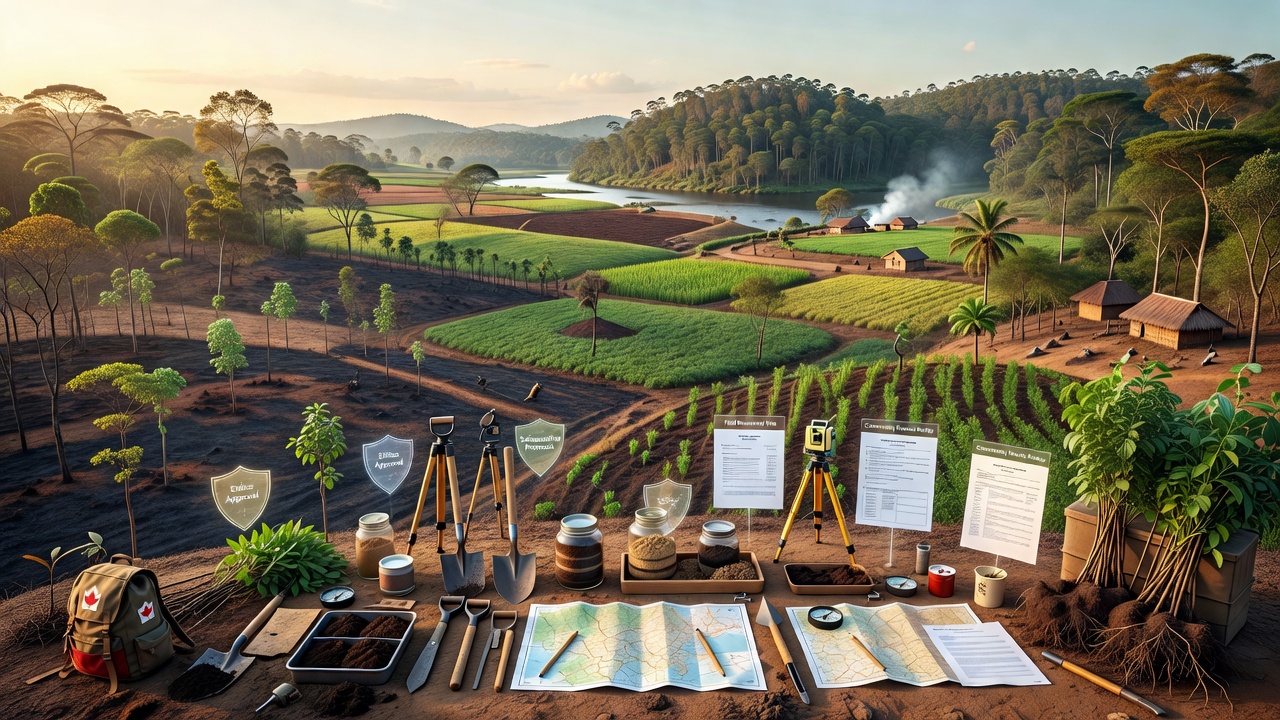
The International Development Research Centre is accepting applications for the John G. Bene Fellowship, which funds Canadian master's and doctoral students doing field research in developing countries. The 2026 call focuses on forest, landscape and food systems restoration, with a deadline of 16:00 EDT on November 30, 2026.
Who Can Apply
Applicants must be Canadian citizens or permanent residents enrolled at a Canadian university at the master's or doctoral level. Candidates should have completed several courses in their program, though not necessarily all of them, before submitting. Doctoral students must also have finished coursework and passed comprehensive exams before the award begins.
The research proposal must be approved by the student's thesis supervisor, and the work must take place in one or more developing countries listed on the OECD DAC List of ODA Recipients. Research cannot be proposed in any country under a Government of Canada "avoid all travel" advisory, and applicants are responsible for following advisories throughout the application and fieldwork.
What the Fellowship Funds
The fellowship supports practical, gender-responsive research on integrated forest, landscape and food systems restoration, including in fire-prone, degraded or disputed landscapes. Proposals should emphasize nature-based solutions that could benefit smallholder farmers, youth, women and Indigenous communities. Work focused on genomics or genetic modification is not eligible.
Awards cover field research costs for up to 12 months. Projects spanning several regions require at least five consecutive weeks in the field in each one. Recipients who need longer fieldwork must find other funding for the additional period.
Application Requirements
Applications must be submitted in English or French and include a 20-25 page research proposal, letters of affiliation from an institution in each country of research, a supervisor approval letter, official transcripts, proof of citizenship or permanent residency, an online budget form and two professor recommendations. Incomplete or late applications will not be considered, and unsuccessful candidates will not receive feedback.
Successful applicants will need university ethics approval and, where possible, local ethics board approval, along with a safeguarding protocol describing risks and reporting mechanisms. Candidates will be notified by email in December 2026 or January 2027.